

A CRM usage audit that rescoped a Sales Hub Enterprise onboarding engagement for a payments platform

A CRM usage audit for an Australian recurring-payments platform for merchants found the sales team already running six pipelines inside HubSpot Sales Hub Enterprise, with a deal record standing in for the company record as the team's working reference point. That finding, and not a training agenda, shaped the onboarding engagement signed months later.
Executive Summary

Context
A signed Sales Hub Enterprise onboarding statement of work followed several months after an in-person CRM usage audit and needs-analysis workshop, and the audit didn't sit idle in between. It surfaced a twenty-eight-stage inbound pipeline flagged as too large to manage, and a legacy import pipeline with thousands of deals parked in a single stage. Those findings set the scope of the onboarding SOW.

What We Built
We ran a HubSpot CRM usage audit and an in-person needs-analysis workshop ahead of a signed Sales Hub Enterprise Standard Onboarding engagement. We then scoped its three training sessions around the audit's own findings and not around a generic walkthrough of existing screens.

Tech Stack
- HubSpot Sales Hub Enterprise
Not a fit if a sales team has no pipeline or record-usage history to audit yet. The value comes from reviewing how reps actually work inside an established CRM, not from designing a structure on a blank system. It also assumes access to genuine usage data, such as deal counts, pipeline stages and which record type reps default to, and not just a policy document describing how the CRM is meant to be used.

The Challenge
A signed onboarding SOW for HubSpot Sales Hub Enterprise is usually built around teaching reps the screens and reports they will use. But a needs-analysis workshop and a usage audit, run months earlier, had already surfaced a structural problem underneath those screens. The sales team had made the deal record, and not the company record, its working reference point.
The client also ran six pipelines. One was a twenty-eight-stage inbound pipeline that the audit flagged as too large to manage, and a legacy import pipeline still held thousands of deals parked in a single stage. Training reps inside that structure would have taught the workaround and left the problem in place.

Our Approach
We ran the audit as its own diagnostic step: a CRM usage review paired with an in-person needs-analysis workshop, held months before any onboarding SOW was signed. Its findings became the reference point the onboarding scope was built against. The deal-record pattern, the twenty-eight-stage inbound pipeline and the parked import pipeline were named as the structural gap that training needed to address. We also carved the Account Management pipeline out of revenue reporting, because it represents existing business and not new business.
The audit also found that of a contact base of more than 70,000, only 272 carried a persona assignment, and all of them were tagged to the same one. Those findings set the scope of the SOW signed months later.
The audit left the client with a decision. Fixing the pipeline and record structure itself is held until the new model is documented, so that the build doesn't encode a design that is about to change. That is also why it sits outside the training time the SOW budgeted.

Impact

A documented structural diagnosis replaced guesswork about CRM usage
Instead of assuming that reps were undertrained, the audit named the specific pattern getting in the way: the deal record standing in for the company record. Onboarding could then address a structural problem and not repeat a screens-and-reports walkthrough.
The onboarding SOW was scoped to the CRM's actual condition, not a template
The audit ran before the Standard Onboarding SOW was signed, so the three training sessions it specified were built around findings already on record, the twenty-eight-stage inbound pipeline and the parked import pipeline. They weren't a template applied to whatever the CRM looked like on day one.
A legacy import pipeline's scale was named and accounted for
The audit put numbers on a problem that had gone unaddressed since an earlier migration: thousands of deals parked in a single stage of a legacy import pipeline with no clear ongoing purpose. That gave the client a concrete finding to weigh against six active pipelines, instead of a vague sense of clutter.
Revenue reporting was cleared of pipeline noise
The audit reviewed all six pipelines, and it led to the Account Management pipeline being explicitly excluded from revenue reporting, because it tracks existing business and not new business. Reporting then reflected only the pipelines that new-business figures should include.
A HubSpot CRM usage audit and an in-person needs-analysis workshop ran months before any onboarding statement of work was signed. That gave the eventual SOW a documented starting condition to scope against, instead of a blank assumption.
The audit's central finding was that the sales team had made the deal record, and not the company record, its working reference point. We named the gap specifically enough that it became the onboarding's scoping question.
Among the client's six HubSpot pipelines, an inbound sales pipeline had grown to twenty-eight stages. The audit flagged that as too large to manage and named it as part of the structure that onboarding needed to address.
A legacy import pipeline from a prior migration still held thousands of deals parked in a single Deal Won stage, with no clear ongoing purpose. The audit surfaced it alongside the inbound pipeline's stage count.
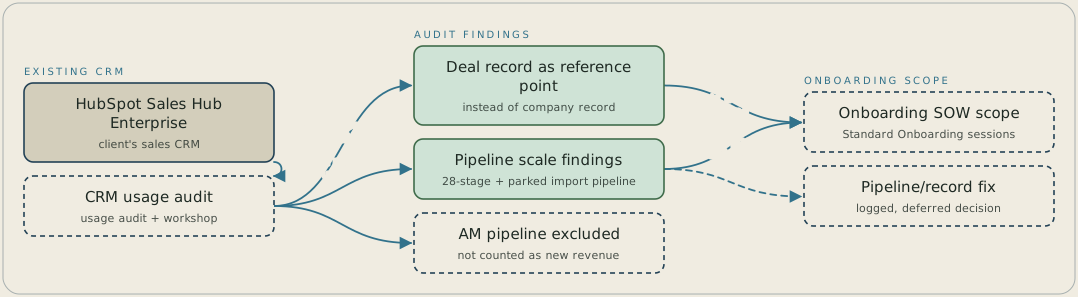
A CRM usage audit and an in-person needs-analysis workshop review how the sales team works inside HubSpot Sales Hub Enterprise. The audit finds that the deal record stands in for the company record, flags a twenty-eight-stage inbound pipeline and a parked import pipeline, and excludes the Account Management pipeline from new-business revenue. The first two findings set the scope of the Standard Onboarding training. Fixing the pipeline and record structure is logged as a decision held until the new model is documented.
FAQ
A Standard Onboarding SOW scoped from a screens-and-reports template can miss the structural habits that already shape how a sales team works. Running the audit first showed that the deal record, and not the company record, had become the team's working reference point. That was specific enough to scope training against, instead of repeating a generic walkthrough.
It looks at how pipelines are actually used: how many exist, how many stages each one has, and which record type reps default to. Here that meant six live pipelines, a twenty-eight-stage inbound pipeline and an import pipeline parked at a single stage.


