

A HubSpot workflow audit that untangled circular phone-number overwrites and years of lead misrouting

Eight workflows wrote to the same set of phone properties on every contact record, two of them copying values in opposite directions, a pattern that risked overwriting a corrected number with a stale one. Ten more workflows assigned a contact's sales region on rules that had misrouted leads for years: United States leads defaulted to an operations manager, United Kingdom leads still routed to a rep who had left. We sorted the client's eighty-plus workflows into four families, Keep, Consolidate, Kill and Reactivate, and presented the plan at the family level, which the client is now working through.
Executive Summary

Context
The client's HubSpot portal was three years old, carrying automation from two earlier partners, never reviewed as a whole. Of 238 workflows, 107 were active, and no single view showed which ones duplicated or worked against each other.

What We Built
We read the logic behind every one of the client's eighty-plus workflows rather than compiling a list, then sorted each into a Keep, Consolidate, Kill or Reactivate family and presented the plan at that level, turning eighty decisions into a handful.

Tech Stack
- HubSpot Sales Hub, HubSpot Service Hub, HubSpot native workflow automation
Not a fit if your portal has too few workflows for overlap to matter, since the value comes from tracing what a large set does to one record. It also assumes a client willing to review the plan as a set, not one wanting each workflow actioned on the spot.

The Challenge
Sixteen phone-number properties existed on the contact record, and eight workflows kept them in sync. Two of those workflows copied values into each other's target field. The client's form wrote one phone entry into both properties, so editing either one could overwrite a value a rep had just corrected.
A separate family of ten workflows set sales region, keyed on region and country, with names layered on top of each other. Nobody noticed the overlap for a long time. United States leads defaulted to an operations manager for close to two years, and United Kingdom leads kept reaching a rep who had already left.

Our Approach
We read what each workflow triggered on, keyed on and wrote to, not just its name. Then we sorted every workflow into a family: Keep for automation doing its job without conflict, Consolidate for overlaps like the phone and region families, Kill for automation with no live purpose, and Reactivate for disabled workflows worth switching back on.
The recommendation sets a target state of one master workflow per process, plus a quarterly audit, so that the overlap can't regrow. We presented the plan at the family level, and the client is working through it before any of it goes live.

Impact

a named cause for years of misrouted leads
United States leads had defaulted to an operations manager and United Kingdom leads kept reaching a rep who had left, both traced to one family of ten overlapping region workflows rather than left unexplained. Naming the cause makes the fix consolidation, not another patch.
a phone-field conflict found before it corrupted more records
Eight workflows copying the same values back and forth risked overwriting a corrected phone number with a stale one, invisible until traced through all sixteen phone properties at once. The audit named the exact workflows responsible.
a review the client can act on in four decisions, not eighty
Sorting eighty-plus workflows into four families turned an unreadable list into reviewable calls, letting the client see the whole plan at once rather than eighty separate items.
a target state that keeps the overlap from regrowing
The recommendation set one master workflow per process and a quarterly audit, so consolidation becomes a standing practice, not a one-time cleanup. The client is working through that feedback before any of it goes live.
Sixteen phone-number properties were kept in sync by eight workflows, two of them copying values into each other's target field. The audit named each workflow and the property it wrote to, the map a single consolidated workflow needs to replace all eight safely.
Ten workflows assigned sales region on overlapping rules keyed on region and country, including a temporary allocation workflow never retired. The audit traced the exact overwrite pattern that defaulted United States leads to an operations manager and kept routing United Kingdom leads to a departed rep.
Every workflow in the account was read for what it triggered on and wrote, not a sample, then placed into Keep, Consolidate, Kill or Reactivate. Presenting the plan at the family level turned eighty individual audits into four decisions.
The plan doesn't stop at removing today's overlap. It sets one master workflow per process going forward, checked by a quarterly audit, the mechanism meant to stop a new phone or region family from accumulating again.
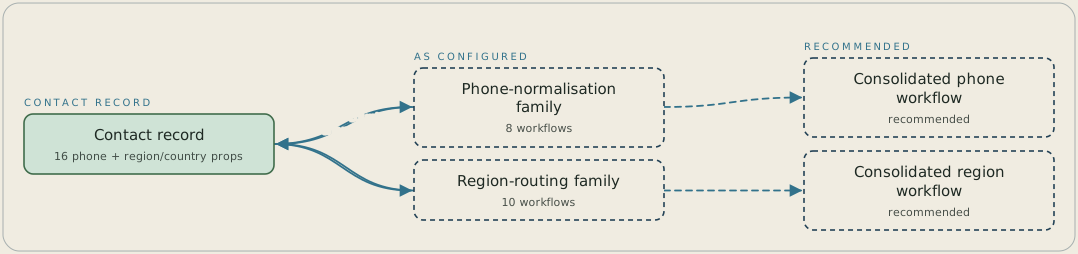
Two families of workflows act on the contact record. Eight phone-normalisation workflows watch the sixteen phone properties and can copy values back and forth, so a corrected number can be overwritten by a stale one. Ten region-routing workflows set the sales region whenever a contact is created or its country changes, with no order between them. The recommendation replaces each family with one consolidated workflow.
FAQ
Eighty-plus line items are too many to act on at once, and treating each workflow separately misses the pattern when several conflict, like the eight workflows copying the same phone fields back and forth. Grouping into four families turns the list into reviewable decisions built around what the workflows do together.
Two of the eight workflows copied values in opposite directions between the same properties, so a correction in one field could trigger a workflow that overwrote it with the older value from the other. With sixteen phone properties already on the record, the risk applied broadly, not to one edge case.


