

Untangling 73 HubSpot workflows that each wrote lifecycle stage on their own
A third-party scan of the live HubSpot portal at an enterprise HCM and payroll SaaS provider counted 194 active workflows, and found that roughly 73 wrote lifecycle stage directly, each carrying its own copy of the logic. The core Demo Request workflow alone enrolled 15,078 contacts while carrying 11 unresolved issues, setting lifecycle stage, Salesforce campaigns, lists, and SDR routing in one flow. The proposed fix replaces those direct writes with one gated central workflow, a reusable segmentation layer, and a split qualification, routing, and notification model.
Executive Summary

Context
The client is an enterprise HCM and payroll SaaS provider whose HubSpot portal carried 194 live workflows, with lifecycle-stage logic written directly by roughly 73 of them and its core demo-request workflow enrolling 15,078 contacts against 11 open issues.

What We Built
A third-party workflow-health scan quantified how far lifecycle-stage logic had scattered, and we designed a phased replacement: one gated central lifecycle workflow, a reusable segmentation layer, and a split qualification, routing, and notification model.

Tech Stack
- HubSpot Workflows
- HubSpot lifecycle stage property
- Howly third-party workflow health scan
- Salesforce campaigns
- HubSpot lists
- HINQL qualification criteria
Not a fit if your HubSpot portal is small enough to hold in one person's head, or if lifecycle stage is already written in one place. This exists because a 194-workflow portal let roughly 73 write lifecycle stage independently, one alone enrolling 15,078 contacts against 11 unresolved issues.

The Challenge
HubSpot workflows can write lifecycle stage as a native, unconstrained action. Any workflow can set it, and nothing arbitrates when two disagree about a contact's stage. A third-party Howly scan of the portal's 194 live workflows found that roughly 73 had taken up that option, each carrying its own copy of the advance logic.
The scan's baseline read an 83 percent health score, one critical broken-enrollment issue and 95 warnings, mostly orphaned workflows nobody had checked in months. The worst of it sat in one workflow. Demo Request - Prospects had enrolled 15,078 contacts and still carried 11 unresolved issues, and it set lifecycle stage, Salesforce campaigns, lists and SDR routing all at once.

Our Approach
We considered patching the 73 workflows one by one and set that aside, because it would leave the scattering in place and hand the next builder the same open option. The audit proposed one central lifecycle workflow instead. It's gated on a per-stage qualification list that names which contacts should already be at a given stage, so a contact advances only once it clears that list.
A reusable segmentation layer sits underneath, so the list logic other workflows need can be called instead of rewritten. The Demo Request and content-download family had absorbed lifecycle stage, campaign writes, lists and SDR routing into one sequence. It splits into three: qualification decides whether a contact belongs, routing decides where it goes, and notification handles who gets told. The change is proposed as a phased move, not a single cutover.

Impact

A scattered lifecycle model got a measured baseline
The Howly scan gave the team a number to work from: 194 workflows, an 83 percent health score, one critical issue, and 95 warnings, mostly orphaned workflows nobody had checked in months. That baseline let the team point at the 73 workflows actually writing lifecycle stage instead of treating the whole portal as equally suspect.
One workflow's four jobs became the reason to split it
Demo Request - Prospects enrolled 15,078 contacts while carrying 11 unresolved issues, all of them inside a flow that also wrote Salesforce campaigns, managed lists, and ran SDR routing. Splitting that flow into a qualification, routing, and notification model means a fix to one no longer threatens the other three.
Lifecycle stage gets one gate instead of 73 open doors
Routing every stage change through one central workflow, gated on a per-stage list, replaces 73 independent opportunities to write lifecycle stage with a single arbitration point. A workflow that used to set stage directly now asks the central workflow instead.
Segmentation logic becomes reusable, not rebuilt
The qualification lists behind the central workflow are built as a segmentation layer other workflows can call, rather than logic locked inside the Demo Request flow. The next workflow needing a contact's stage reads the same layer instead of writing its own version.
A third-party scan (Howly) inventoried all 194 live workflows, scoring portal health at 83 percent and flagging one critical broken-enrollment issue and 95 warnings, mostly orphaned or isolated workflows. The scan located the roughly 73 workflows writing lifecycle stage directly, rather than leaving the finding as an estimate.
The audit traced the Demo Request - Prospects workflow directly: 15,078 contacts enrolled, 11 unresolved issues, and four jobs, lifecycle stage, Salesforce campaigns, lists, and SDR routing, running inside one flow. That diagnosis made this workflow the split's starting case rather than a general cleanup pass.
The proposed replacement is one workflow owning every lifecycle-stage write, gated on a per-stage list defining which contacts should already be at a given stage. A contact's stage changes only once it clears that stage's own qualification list, closing the 73 open paths the direct writes had created.
The Demo Request and content-download family splits into three roles: qualification reads the segmentation layer to decide whether a contact belongs, routing (including SDR routing) decides where it goes, and notification handles what gets communicated, replacing the flow the 11 open issues had accumulated inside.
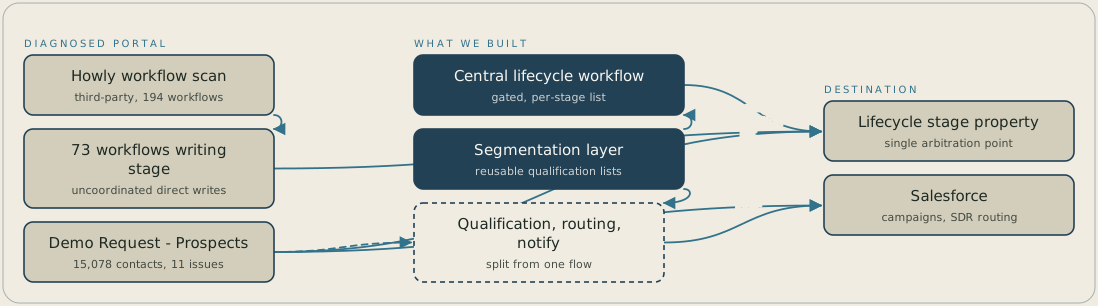
A third-party Howly scan of the portal's 194 live workflows found about 73 writing lifecycle stage directly, including the Demo Request - Prospects workflow, which also sets Salesforce campaigns, lists and SDR routing in one flow. The proposed replacement sends every stage change through one central lifecycle workflow, gated on a per-stage qualification list, so the lifecycle stage property is written in one place. A reusable segmentation layer feeds those lists and the three workflows that replace the Demo Request flow: qualification, routing and notification. Routing and campaign writes still reach Salesforce from those workflows.
FAQ
Fixing the issues in place would still leave lifecycle stage writable by 73 other workflows, so the conflict could reappear elsewhere. Routing every stage change through one gated central workflow removes the option instead.
Each lifecycle stage carries its own list naming which contacts should already be at that stage. The central workflow advances a contact only once it clears that list, rather than whenever any of the 73 workflows touches the property.


