

Rebuilding a quiz funnel to clear Meta's sensitive-health-content policy
A dental practice group's implant-suitability quiz ad kept getting paused on Meta for naming a condition or an outcome, which the platform's sensitive-health-content policy flags. The quiz was rebuilt as a multi-step form deferring the phone number to a later step, feeding a HubSpot workflow that creates the CRM record on a cleared submission. The rebuilt funnel relaunched on Meta in April 2026.
Executive Summary

Context
A multi-location dental practice group ran a quiz-style ad on Meta screening visitors for implant suitability before they reached a form. The ad named the condition and the outcome, and Meta's review paused the campaign for it each time.

What We Built
The team rewrote the ad and quiz copy to drop the named condition and outcome, rebuilt the form to ask for a name and email first with the phone number deferred under an A/B split, and connected a cleared submission to a CRM-creating workflow.

Tech Stack
- HubSpot landing page and multi-step form
- HubSpot workflow creating the CRM contact record
- Meta Ads (Facebook/Instagram) quiz campaign
Not a fit if campaign changes need sign-off from more than one stakeholder, since this rebuild moved through a single principal-approver gate for launches and for budget changes above a set threshold. It also assumes the ad and quiz copy can describe the offer without naming the condition or outcome at all, since the gate depends on that generality rather than a case-by-case review.

The Challenge
A quiz-style ad screening patients for implant suitability ran on Meta as part of the practice group's paid-media retainer. Meta's automated review flags copy naming a personal health condition or outcome as sensitive-health content, and the original creative named both. Each launch tripped the flag and paused delivery, so the ad sat idle until the line at fault was diagnosed and resubmitted, a cycle that repeated because the underlying language and form had not changed.

Our Approach
The original ad and quiz named the condition and the outcome directly, describing missing teeth and a restored smile, exactly what Meta's policy flags in a screening ad. Each relaunch of that language tripped the same review. The rebuild kept the funnel's shape, an ad leading to a landing page, a form, a thank-you step and a CRM record, but rewrote the entry point and the form against that gate. Copy stopped naming the condition or outcome, holding the offer at a generality the review does not flag. The form now asks for a name and email on entry, with the phone number deferred to a later step under an A/B split. A HubSpot workflow triggers on a completed submission and creates the CRM record, the same trigger the flagged version used, now firing on copy that clears review.

Impact

The campaign runs on Meta without repeated policy holds
The rebuilt ad and quiz no longer name the condition or the outcome, so Meta's review has nothing in the copy left to flag. The quiz relaunched in April 2026 and has kept running since, rather than sitting in review for each new variant.
A lead only needs a name and email to clear the form's first step
The phone-number field moved to a later step, tested through an A/B split against asking upfront, so a visitor only gives a name and email to get started. That lower first-step commitment was the friction the rebuild targeted.
A completed quiz creates its own CRM record
A HubSpot workflow watches for a finished submission and creates the contact record directly from it, so a completed quiz becomes a working lead in the CRM without a manual export or a separate sign-up step.
The rebuild is marked complete in delivery tracking, not still in review
The quiz rebuild is recorded as complete in the delivery tracker alongside the rest of the retainer's build scope, a campaign that cleared platform review rather than one still working through it.
Ad and quiz copy were rewritten to drop the specific condition and the outcome it implies, the generality Meta's review does not flag. The rule applies to the ad creative and the quiz's own questions alike.
The form asks for a first name, last name and email on entry and moves the phone number to a later step, tested through an A/B split. The later ask keeps first-step friction low while still collecting a callable number.
A HubSpot workflow triggers on a completed submission and creates the CRM contact record, the same trigger the flagged funnel used, now firing on copy that clears review.
The funnel kept its ad, landing page, form, thank-you step and CRM record structure, so the fix sat in the copy and field order rather than a new funnel built from scratch.
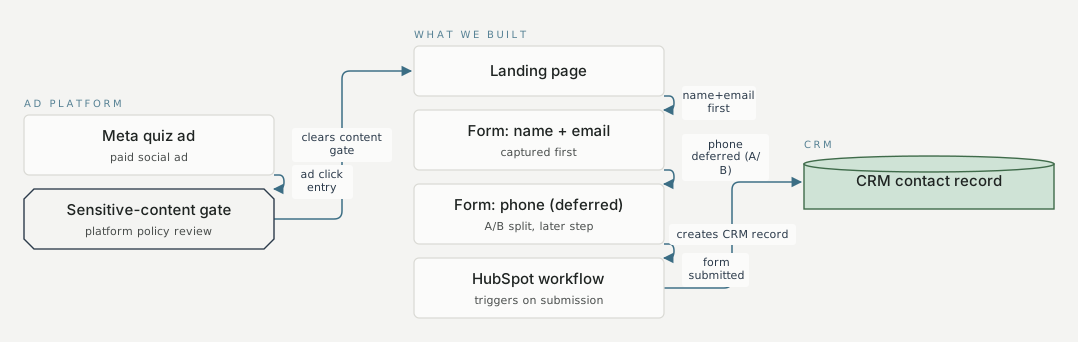
Ad platform What we built CRM Meta quiz ad paid social ad Sensitive-content gate platform policy review Landing page Form: name + email captured first Form: phone (deferred) A/B split, later step HubSpot workflow triggers on submission CRM contact record ad click entry Ad click or organic entry into the quiz clears content gate Language must avoid naming a personal health condition or outcome name+email first First and last name and email captured early phone deferred (A/B) phone number deferred to the end of the flow (A/B split) to reduce friction form submitted mechanism 1 creates CRM record mechanism 1
FAQ
Meta's sensitive-health-content policy flags copy naming a personal health condition or outcome, and the original ad and quiz both did. Each relaunch of the same language tripped the same review, so the campaign paused again.
The rebuilt form asks for a name and email first and defers the phone number under an A/B split. A HubSpot workflow then creates the CRM record once the form clears, rather than a manual step.


