

Rebuilding a 437-page site into 17 pages

A 52-page site was producing little: a 73% bounce rate and organic traffic on only about 43 of its 437 indexable pages. We rebuilt it as a 17-page HubSpot Content Hub site, folding more than 30 thin service pages into four Solutions pillars, and relaunched it in December 2025.
Executive Summary

Context
A business process outsourcing and customer experience group's website had grown thin across 52 pages, most drawing no organic traffic. We consolidated it into a 17-page HubSpot Content Hub build around four Solutions pillars and new outcome-led pages, relaunching in December 2025 against stated targets.

What We Built
A 17-page site on HubSpot Content Hub, replacing a 52-page build, organised around four Solutions pillars and new outcome-led pages, carrying a refreshed visual identity system.

Tech Stack
- HubSpot Content Hub Enterprise
- HubSpot Marketing Hub Enterprise
Not a fit if an existing site's thin pages already carry meaningful non-branded traffic. This approach assumes that traffic concentrates on a few pages and branded terms. It also assumes a CMS move is acceptable, because this rebuild moved the site onto HubSpot Content Hub rather than restyling pages in place.

The Challenge
The existing site carried 437 indexable pages, but only about 43 drew any organic visitors, and more than half of that traffic came from two search terms built from the client's own name. The rest sat idle: thin, overlapping pages a search engine had little reason to rank.
Once someone did land, a 73% bounce rate and an 85-second average session showed the site wasn't holding attention. More than 30 pages described individual services in isolation, which split one buying question across near-duplicate pages, and none of them ranked.
Rewriting those pages one by one would have kept the fragmentation intact. So we set the page count itself as the rebuild's target.

Our Approach
We audited all 437 indexable pages to see which ones drew organic traffic, and we treated the rest as candidates for folding rather than pages to preserve. We folded more than 30 thin service pages into four named Solutions pillars: Customer Experience Management, Data/Analytics & AI, Consulting & Transformation, and Enterprise Services. Each pillar answers one buying question instead of describing one service alone.
New Outcomes pages gave a second entry point built around what an engagement changes. We moved the site onto HubSpot Content Hub rather than restyling the old templates, and carried a refreshed visual identity through every page in the build that cut the page count.
The finished 17-page site relaunched in December 2025 against four stated targets: traffic up 5%, time on site up 40%, bounce down 20%, and visit-to-lead conversion up 25% by June 2026. Those targets were set at launch, and they hadn't been remeasured as of the material reviewed.

Impact

From 437 indexable pages to 17
The site now carries 17 pages instead of 52, with 437 indexable URLs folded into four Solutions pillars and a set of Outcomes pages. A search engine crawling the site finds one page built to answer each buying question, not a dozen overlapping pages competing for the same intent.
More than 30 thin pages became four pillars
The 30-plus service pages that fragmented the old site's coverage now sit inside four named pillars: Customer Experience Management, Data/Analytics & AI, Consulting & Transformation, and Enterprise Services. Each pillar carries the ground several thin pages used to split between them.
New Outcomes pages, a second entry point
The rebuild added Outcomes pages that didn't exist on the old site, giving an executive reader a route into the site organised around what the engagement changes. That entry point runs alongside the Solutions pillars, not in place of them.
A relaunch measured against named targets
The December 2025 relaunch was set against four stated targets: traffic up 5%, time on site up 40%, homepage bounce down 20%, and visit-to-lead conversion up 25% by June 2026. Those targets were set at launch. Performance against them hadn't been remeasured as of the material reviewed.
We set 17 pages as the target before writing new copy, auditing which of the 437 indexable pages drew organic traffic and treating the rest as candidates for folding. Cutting the page count first meant the new architecture had to carry the whole site's coverage in a fraction of the pages.
More than 30 service pages were folded into four named pillars: Customer Experience Management, Data/Analytics & AI, Consulting & Transformation, and Enterprise Services. Each pillar answers one buying question with the depth several thin pages used to divide between them.
New Outcomes pages were added alongside the Solutions pillars, not instead of them, giving an executive reader a route into the site built around what the engagement changes rather than which service delivers it.
The rebuild moved the site onto HubSpot Content Hub rather than restyling the existing templates. That same build carried a refreshed visual identity through every page and cut the page count, so the platform move and the content consolidation shipped as one project.
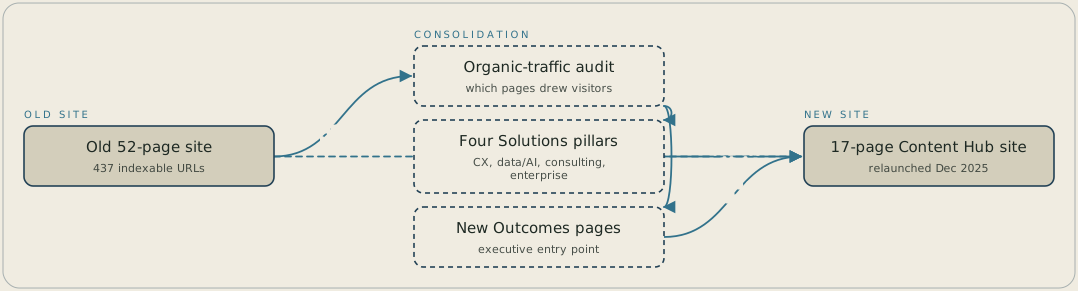
The old site has 52 pages and 437 indexable URLs, and only about 43 of them draw organic traffic. An audit sorts those pages by which drew visitors. More than 30 thin service pages are folded into four Solutions pillars, and new Outcomes pages add an entry point for executives. Both feed the 17-page HubSpot Content Hub site that relaunched in December 2025, and the old pages aren't migrated one by one.
FAQ
Rewriting each of the 52 pages would have kept the same fragmented structure, most of it drawing no organic traffic. Folding more than 30 thin service pages into four Solutions pillars let the new site answer each buying question once instead of several times over.
They were folded into the four Solutions pillars or the new Outcomes pages rather than carried forward individually. Because so little organic traffic depended on any single page, folding them concentrated the site's coverage instead of removing it.


