

An MVP HubSpot Architecture and NetSuite Integration for an Experiential Marketing Agency's Digital Pivot

An experiential marketing agency had built its business on live events, and the events stopped happening in 2020. The pivot into digital experience offerings demanded an inbound engine the agency had never needed: a HubSpot architecture that could process leads consistently across sales and marketing teams in three locations, plus a connection to the NetSuite instance where the finance side of the business already lived.
Executive Summary

Context
An event production and experiential marketing agency serving major brands was standing up digital experience services, and the inbound marketing motion to sell them. Lead logging and tracking lived in existing systems that had never been designed for an inbound funnel. Three locations meant three chances for process drift.

What We Built
A minimum viable HubSpot lead-flow architecture built for the client's own team to scale. It covered a nine-dimension system audit, a lead flow chart and information architecture with a definitions glossary, custom properties and qualification workflows, ads attribution tracking, reporting dashboards, role-based onboarding, and a NetSuite integration.

Tech Stack
- HubSpot Marketing Hub
- HubSpot Sales Hub
- HubSpot Workflows
- Ads Attribution Tracking
- NetSuite
Not a fit if you have no internal team able to own and scale the architecture after handoff. This MVP lead-flow build was designed for a client team to run and extend on its own after delivery. Without that internal ownership, the flow chart, definitions glossary, and workflows delivered here would sit unused, and the value of the architecture would never reach production.

The Challenge
The pivot compressed a multi-year marketing maturity curve into one planning cycle. The agency's existing systems for logging and tracking leads reflected an events business: relationship-driven, referral-heavy, nothing resembling an inbound funnel. Digital offerings meant qualified leads would now arrive from campaigns. Yet nobody shared a definition of what qualified meant, no assignment logic covered the three locations, and no attribution told marketing which ads produced pipeline. Finance added a second constraint. Revenue operations ran through NetSuite, so any CRM architecture that ignored it would recreate the disconnect one system over.

Our Approach
We architected first and configured second. An onboarding survey and a discovery workshop established how leads actually got qualified and what the sales cycle looked like. A system audit then covered nine dimensions of the existing setup: contact, company, and deal field mappings, state and country settings, lead assignment rules, validation rules, ads attribution tracking, automated workflows, and reporting. Strategic workshops converged on a lead flow chart and an information architecture, delivered with a definitions sheet: a glossary that gave sales and marketing one vocabulary for lifecycle terms, iterated through a structured revision round. A roles and responsibilities sheet assigned every part of the system to a named function before implementation began. The build itself delivered custom properties, qualification and notification workflows, ads attribution, reporting dashboards, onboarding for the people who would run the system, and the NetSuite integration connecting the new CRM to the systems where revenue was recognized.
This engagement is part of our implementation + onboarding work for marketing & advertising organisations.

Impact

One Lead Flow Across Three Locations
Leads from the new digital offerings now move through one documented flow, no matter which office they touch. Qualification is consistent. Sales gets notified automatically, and assignment logic doesn't depend on local habit.
A Shared Vocabulary Before a Shared System
The definitions sheet turned lifecycle stages, lead statuses, and qualification criteria into a glossary both teams signed off on. What counts as a marketing qualified lead got settled in that document. Pipeline reviews stopped relitigating it.
An Architecture Scoped to Be Outgrown
The architecture was deliberately scoped as a minimum viable product, built for the agency's own team to extend as the digital business grew. The roles and responsibilities sheet made that ownership explicit at handoff instead of leaving it assumed.
CRM and Finance Systems Connected From the Start
The NetSuite integration linked the new HubSpot instance to the platform where finance operated. The digital pivot didn't create a marketing system disconnected from revenue recognition.
Before any configuration, an onboarding survey captured how each team qualified leads and expected to use HubSpot. A discovery workshop pressure-tested the answers. A system audit then reviewed the incumbent systems: field mappings across contacts, companies, and deals, assignment rules, validation rules, attribution, workflows, and reporting.
The core of the work was a visualized information architecture: how every lead, new or existing, moves through HubSpot. A definitions sheet pairs with it as the glossary of terms. The architecture went through a structured revision round with the client's stakeholders before a comprehensive report and action plan locked the implementation scope.
Implementation delivered custom properties for the agency's business model. Workflows automate qualified-lead notifications to sales staff and lead status updates. Ads attribution tracking was wired from the website into the CRM, so campaign spend can be read against pipeline.
The NetSuite integration connected the CRM to the finance platform. A roles and responsibilities sheet, plus onboarding for the client's stakeholders, transferred the system to the internal team. Every operating task got a named role.
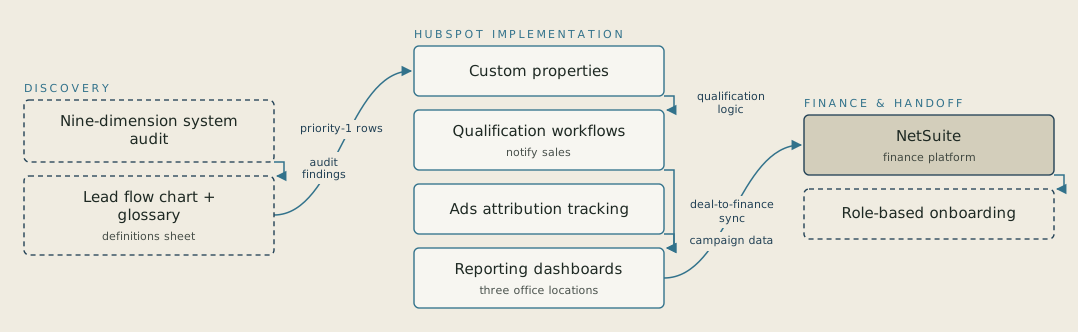
After the pivot, nobody shared a definition of a qualified lead. No assignment logic covered the three locations, and revenue operations ran through NetSuite. So we architected before we configured. A nine-dimension system audit and a discovery workshop came first, then a lead flow chart and a definitions glossary. Only after that did we build the HubSpot properties, workflows and the NetSuite integration.

FAQ
Because the business was mid-pivot and the requirements were guaranteed to change. An MVP lead-flow architecture gets a consistent, documented process live quickly, and the internal team is set up to extend it as the new offerings mature. The alternative was specifying a full build against a business model still taking shape. That produces an architecture that's wrong by the time it ships.
The dimensions that silently break lead flow later: contact, company, and deal field mappings, lead assignment rules, validation rules, state and country settings, ads attribution, existing automated workflows, and reporting setup. Auditing those before design means the new architecture reuses what works and replaces what doesn't. Nobody discovers a conflicting validation rule in week one of go-live.


